|
Can
You Make 6-Figures With Your
Music?
by Mike Grebb.
This article first appeared
in The
Musician's Atlas' March 2006 Atlas Plugged Newsletter
and is used by permission. The
Musician's Atlas is a fantastic
resource for musicians, containing
over 30,000 music
business contacts.
Back to The
Academy
What is the definition of
success in today's music marketplace? Last century, a label deal, stretch limos
and contract riders demanding blue m&ms were some of the sure signs that you
had arrived. But with a music industry currently in flux and moving warp speed
ahead, success now comes in many different flavors. The most common answer we
hear is "making my living making my music". No matter what your definition of
success is, chances are this month's featured industry guru, Daylle Deanna
Schwartz, can help you maximize your goals.
You may have noticed that we like to speak with artists,
industry leaders and other insiders that really have something to say on the
topics we cover- experts that can add insights based on actual experience.
That's why we really dig speaking to author/consultant, Daylle Deanna
Schwartz.
Schwartz goes out and really talks to people. Lots of people.
Her books are chock full of advice and case studies culled from real artists,
labels and other industry players.
Schwartz' past books include "The Real Deal: How to Get Signed
to Record Label" and "Start & Run Your Own Record Label." In her latest
title, Schwartz tackles the subject of artist success from an entirely different
angle. "I Don't Need A Record Deal!" actually explores how artists can make a
living without groveling to A&R guys at major or even indie labels.
In fact, Schwartz posits that the tools now available to
musicians are unprecedented. After speaking to more than 150 artists and music
professionals, she puts forth a rather simple proposition: Artists who are willing to perfect their art, work
hard on the "business side," seize opportunities (i.e., ask for things rather
than wait for them to happen) and just stay positive and professional can
succeed without the help of a record label. She makes a pretty compelling
case that just about anyone who is willing to put forth the effort can make it
in the modern music industry.
Even artists who are seeking a record deal, Schwartz says,
can't simply wait around to be "discovered." If that was ever the norm, it isn't
any more. Most labels don't seek out raw
talent these days. Sure, talent is a prerequisite (well, usually it is).
But they're primarily seeking out buzz and fanbases-something they can market
without starting from scratch. In other words, they seek out artists who have
built a mini-empire with their blood, sweat and tears and want to go to the next
level. "The only way to get a record
deal is to develop yourself, practice your performance... and then the labels
come to you," she says.
For artists who are happy to remain on their own, Schwartz
provides a treasure trove of advice about how to find the tools to make it
happen. And she interviews dozens and
dozens of DIY artists, some of whom make six-figure incomes as full-time music
professionals (and without a label looking over their shoulders). Many of
the artists she interviews have turned down label offers despite promises of
greater fame or increased exposure.
With insights provided by touring talent, "I Don't Need A
Record Deal!" covers everything from the nuts and bolts of marketing and
promotion, to how to sooth the vocal chords while on tour (run the shower with
the bathroom door open so it will humidify the hotel room), to street marketing
and building an online buzz, to going beyond the club circuit and CD sales to
generate income. "You want to create as many revenue streams as you can,"
advises Schwartz.
She stresses that artists don't have sell out in order to make a
living. But mixing a bit of the high-paying, high-profile gigs with those
less glamorous $50 opportunities may be a wise strategy. "You have to take it as
seriously as a day job," she says. That includes things that seem "beneath" many
artists, including playing cover shows or even weddings and Bar Mitzvahs. "What
part of good money affects you so badly?," she asks, noting that someone at the
event could become a fan or hire an artist for another event. "If you're singing
at weddings, you're getting exposure," she says. "You're playing for someone who
might hire you in the future." Trying to make it by limiting yourself to playing
dingy clubs for peanuts may fulfill some kind of tortured-artist dream-but it
seldom pays all the bills and can even lead to premature bitterness and
surrender, she says.
Throughout the book, Schwartz recounts example after example of
indie artists who have plenty of street cred but sustain themselves by singing
jingles, doing session work, licensing music to or composing for TV commercials
or corporate videos, or even licensing songs to unlikely places, such as the
music that plays on voice mail systems. "Start paying attention everywhere you go,"
she says. "When you hear music, someone is getting paid. Why not you?"
Schwartz even walks you through licensing terminology like "bumpers," "vamps"
and "prevamps." Don't know what those are? Check out page 204.
And did you know where to find contact info for music
production houses, which pay big bucks for people to compose music for TV
commercials and other advertising? It's in the book. How about contacting AEI
Music Network, which licenses music to airlines and retail stores? Or
approaching small local businesses to see if they need music for a TV commercial
or the customer voice mail system? It's that kind of thinking outside the box that can create
revenue opportunities and help sustain your art. As Schwartz states in
the book, your day job might as well have something to do with music. Some
artists sustain themselves by teaching music to others or getting involved in
writing workshops. Given a choice between waiting tables or singing jingles,
which do you think will help your music career more?
Schwartz also covers touring strategies that go beyond the
traditional club route. Artists these days can play house concerts, hospitals,
schools... you name it. And have you thought about international markets? Cruise
ships? Military tours? The opportunities are out there; all you have to do is
seek them.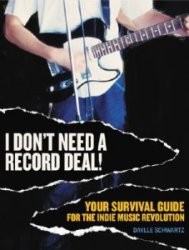
All artists are different. Those who want to suffer endlessly
for their art may not want to read Schwartz' book. But for those who want to
make a living at music, "I Don't Need A Record Deal" is a well-researched user's
guide packed full of real-world case studies and advice. Record deals can be a
wonderful thing when the stars align. But Schwartz told me something during our
interview that stuck with me. "I'm not against record deals," she said. "I'm
against being desperate for a record deal." Hear, hear.
--
(Mike Grebb is a writer, journalist and
singer/songwriter based in Washington, D.C. He has written for numerous
publications, including Wired and
Billboard. His debut solo record, Resolution, is available at www.mikegrebb.com, as well as digitally on iTunes, MSN Music,
Musicmatch, Yahoo! Music Unlimited and other sites. You can also be his friend
on MySpace!) .
|