|
 Publicity Tips: Publicity Tips:
Working With the Press
by Christopher Knab - Fourfront
Media & Music - Updated March, 2010
Back to Music
Business 101
The job of a music publicist is to create a database of contacts within the entertainment industry, and determine which magazines, newspapers, fanzines, as well as music blogs and e-zines are most likely to review a client’s record, interview them, or write a feature story. This job is not any easier than finding a distributor or getting radio airplay.
Publicity, by itself, does not sell a lot of records.
It is most effective when your name is consistently in front of music fans. That will not happen overnight. You will most likely be your own music publicist in the beginning, and it will take you some time to learn how to work with the press. But, learning some basic facts about music journalists and how they operate is as important as the tips I gave you for working with distributors and radio stations.
Music journalists are a strange breed. They are, for the most part, a fickle group of individuals with their own inconsistent musical tastes, egos, and attitudes. If you want your local music magazine, or some music e-zine to write a story about you, even review your record, there are some things to learn about these important gatekeepers. If you anticipate getting a newspaper entertainment editor to pay attention to your latest release, or write a feature story on you; being aware of the work habits of these professional journalists can be a great deal of help to you.
Here are some important facts for you to know about the people who may write a review of your new record.
- There is a hierarchy of influential music writers across the country, and everyone of them, from the tiniest local music fanzine editor, to the writers who work for Rolling Stone or Spin, all have egos. Even the guy who writes reviews for some start-up Music Blog dedicated to ANY genre of music cops an attitude. That attitude can either help or hurt you, depending on what you know about them, and their likes or dislikes. So, research the tastes of music writers carefully before you e-mail or snail-mail your press kits looking for reviews.
- Never address your press material envelopes generically to any publication -Music Sandwich Monthly, or whatever. If you do that, most likely what will happen is that your CD will be put into a large pile of similarly addressed envelopes, and the lowest ranking writer on the staff of the publication will be assigned to check out your music. If that happens, your music might be listened to and reviewed by someone who hates your kind of music and uses their review to rant and stomp all over your precious release.
- Always research the music blogs, websites, magazines, newspapers, fanzines and e-zines carefully. Take time to read some of the reviews, articles and feature stories, and take note of who wrote them. When you find a positive review for a records that is close to your genre or style, remember the writer’s name and when you do your mailing, address it to that person.
- When you find a negative review of a record that is close to what your music is like, take note of that writer, and do not send them your record for review.
- Follow-up on every press mailing you send out. Give it a week to 10 days, then phone the publication, email them, or message them asking if they received your record. If you actually make contact, find out if the record has been listened to yet, and if they plan to do something with it. Be polite and professional. Most writers are quite conscientious about responding to publicist’s calls or emails, but I can assure you that you will meet your share of characters in the world of music journalists.
- When you leave a phone message or write an email, be very specific in your message. Introduce yourself, and state clearly why you are calling or writing them. Leave contact information too. You would be surprised how many people don’t.
- If you have had trouble getting a response from a publication or any Blog writer or e-zines watch your attitude. I have seen and heard many messages that start to argue with a reluctant reviewer. That is a sure way to not make a new contact, or lose an established one.
- If you score with a publication, and they agree to do a story on you, or interview you – keep any promises you made to get them more information, or sending another copy of your CD. ( Ask too, if they accept mp3 attachments to emails, or if they have a way for you to upload songs to them. If you flake out on an appointment, or show up late for an interview, you may have lost a valuable ally. Writers are busy people, just like everyone else in the entertainment industry, and too many artists and bands have an unprofessional attitude when it comes to dealing with writers and editors.
- When a review or article on you comes out and you find things about it that are objectionable to you, watch your temper. No artist gets only glowing reviews. Bad, or mediocre reviews are part of the game. Avoid the temptation to write or call back when you are emotionally heated about the story. Publicity is about making and keeping relationships with the press. You never want to get a reputation for being a jerk or a troublemaker. If you do lose your temper, I can assure you your tirade will show up in the next issue of their publication – and no, I am not one of those people that believe all publicity is good publicity.
Working with the press, finding contacts, making the initial connections, and nurturing the relationships along the way from local, to regional to national recognition is a time consuming commitment. But, publicity done well and consistently over time can be a career rewarding experience.
-----
Christopher Knab is an independent music business consultant based in Seattle, Washington. He
is available for private consultations on promoting and marketing independent music, and can be reached by email at: chris@chrisknab.net
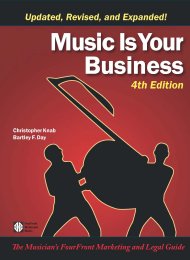
Chris Knab's book, 'Music Is Your Business'
is available from the Music Biz Academy bookstore.
Visit the FourFront Media and
Music website for more information on the business of music from
Christopher Knab.
|